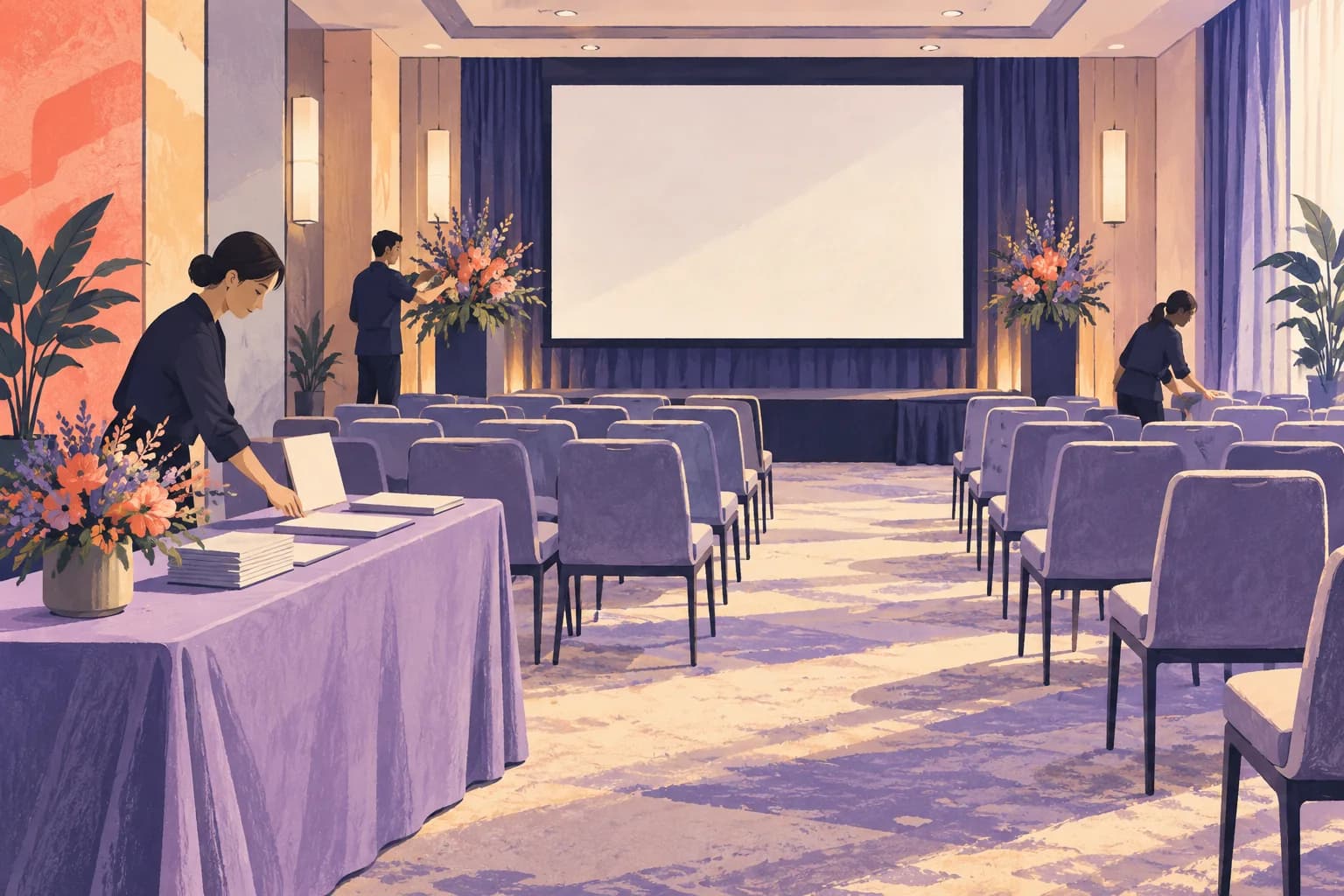
A small exhibition booth is a sales conversation with a floor plan. Decide what a visitor should learn in 30 seconds, what staff can demonstrate safely and what follow-up a visitor can choose. Then request the organiser's current exhibitor manual before ordering furniture, printing or power. Rules differ by show and venue.
What should the booth do for the visitor?
Pick one audience and one useful offer. For an illustrative business software booth, the goal might be to book 12 qualified demonstrations over two days. That number is a fictional target, not an expected conversion rate. A visitor should be able to see the problem, the product's relevant outcome and the next step without a 10-minute pitch. Place the main message where a passer-by can read it, and make a demo accessible from the public aisle without blocking it. Avoid claiming approval from the organiser or regulator unless the claim is documented.
Draft a floor plan with the display, power, seating, storage and queue space. Ask the organiser about stand dimensions, permitted heights, loading time, contractors, electrical work, insurance, accessibility and dismantling. If equipment or a screen is involved, the event AV quote guide gives a common specification for supplier comparisons. Our workshop venue guide covers sightlines for a small seated demo, but the exhibition manual controls the booth itself.
How do you compare the real cost?
Build a budget with space rental, mandatory organiser fees, design, printing, furniture, power, connectivity, freight, staff time, accommodation if relevant, lead tools and teardown. Ask vendors to separate reusable items from one-off work. A fictional Stand A may be cheaper to build but require paid daily storage; Stand B may be modular and reusable across three shows. Compare the first show and the expected next two separately. CCCS's price-transparency guidance offers a useful reminder to ask for a total price and the conditions attached to discounts, even for procurement decisions.
Prepare one lead note per conversation: the visitor's requested follow-up, product interest and named staff owner. Do not scrape badge data or assume a scanned pass permits unrelated marketing. PDPC's data-protection obligations provide the official framework for personal-data handling. Tell visitors what information is being collected and how it will be used, and assess the right permission for each channel. Limit exports and delete duplicate or unneeded records after reconciliation.
What happens after the show?
Before the doors open, write three follow-up templates: requested demo, requested information and no follow-up. Make staff select the right one. Review lead quality, appointments actually held and cost per useful conversation, not only badge count. Ask the organiser for the final exhibitor rules before committing to supplier orders. If you also plan a speaking slot, the AI meetup guide helps structure a short educational session.
You may send EventsHub a booth-scope question for editorial guidance. We do not represent an exhibition organiser or promise a stand supplier.
Before print approval, read every sign as a visitor who has never heard of the business. Remove claims the team cannot explain or document, and ask one colleague to find the booth’s next action within five seconds. If they cannot, simplify the message before paying for production.
Common questions
Should every badge scan enter a marketing list?
No. Define the promised follow-up and assess the required notice and permission before using personal data.
Can a designer price the booth without the exhibitor manual?
Ask for a provisional estimate, then confirm it against the actual rules, dimensions and mandatory services.
Which result should be measured?
Use qualified conversations and follow-up outcomes tied to the stated goal, alongside total cost.
Sources
- price-transparency guidance ccs.gov.sg
- data-protection obligations pdpc.gov.sg
Something changed or worth adding?
Send a correction or suggestion