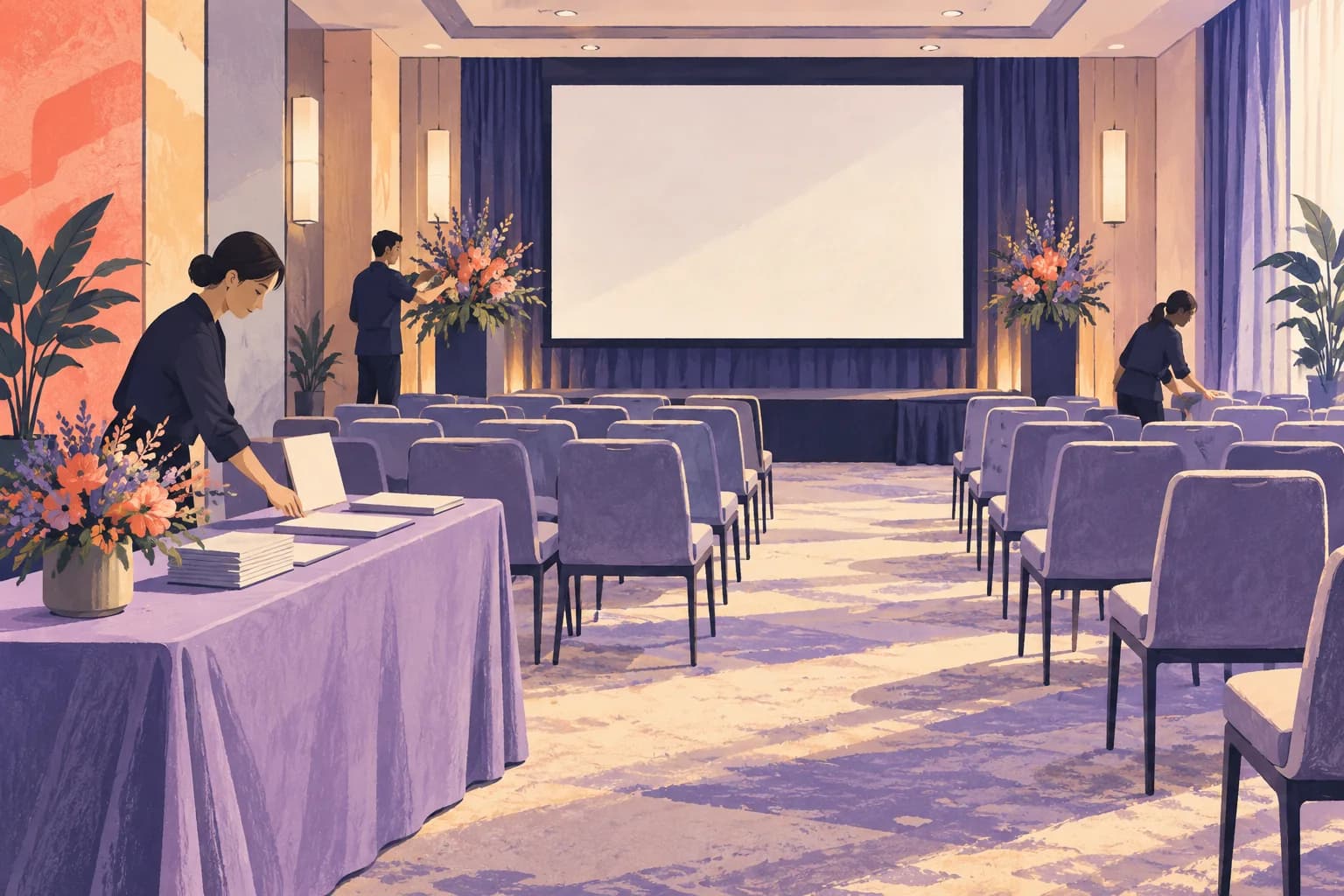
A small business conference succeeds when attendees can follow the programme and take a useful action afterward. Start with one theme and two or three questions the audience wants answered. Only then compare venues, speakers and production suppliers. An oversized agenda can make a modest conference harder to deliver and less valuable.
What is the programme trying to achieve?
For an illustrative 80-person half-day conference, suppose the audience wants practical examples of using AI in customer operations. This is a fictional event, not a listing. Set a welcome, two short talks, one worked case, a break and a moderated question session. Ask every speaker for the learning point, required equipment and any product pitch or paid relationship to disclose. IMDA's starter kit for testing LLM applications can inform an evidence-based AI case, but do not turn an official technical guide into an endorsement of a speaker or vendor.
Write a room brief with 80 seats, sightlines, microphones, projection, stage access, quiet space, registration area, food service and a rain-safe arrival route. Ask the venue for its current capacity and technical rules. If using an NParks venue, its event-venue booking page sets out booking triggers and lead time; private conference venues use their own terms. Our workshop venue guide gives detailed layout checks, while the event AV guide helps compare microphone, screen, technician and rehearsal quotes.
How do you compare the total production cost?
Send the same schedule to venues and suppliers. Ask for space, furniture, staff, setup, catering, AV, recording, accessibility support, cleaning, taxes, overtime and cancellation costs. A fictional Venue A might include basic microphones but charge for recording; Venue B might include a technician but have a higher room fee. Compare the complete run of show under the same assumptions, including one hour of rehearsal. Get speaker travel and honorarium terms in writing. Do not advertise a speaker until they have confirmed.
For registration, ask only for information needed to organise attendance and clearly separate optional sponsor contact. PDPC's data-protection obligations provide the official framework for personal-data use. If a sponsor pays for visibility, label that role clearly in the programme; do not imply editorial independence where content was sold. The event registration guide covers seat control, check-in and refunds.
What is the day-of-event fallback?
Name a programme lead, venue lead, AV lead and check-in lead. Test the opening slide and first microphone, and keep a copy of talks that can be shown without an internet connection. Decide how to handle a late speaker or broken projector. After the conference, share any promised materials and measure actual useful outcomes, such as session feedback and requested follow-ups, rather than only registrations. You can send EventsHub a conference-brief question for editorial help. We do not produce conferences or claim a venue or sponsor partner.
Prepare a one-page speaker agreement listing topic, slot length, slide deadline, recording choice, permission to share materials and any payment. The same document should identify who approves a last-minute content change. A clear speaker handoff reduces technical surprises and lets attendees know which sessions are educational and which are sponsored.
Common questions
Should every sponsor receive attendee contact details?
No. Explain the proposed use and assess permission and PDPC obligations separately.
Is registration count the same as attendance?
Track check-ins and feedback; registrations alone do not show who came or found value.
What should be rehearsed?
Test the first session, microphones, screen, speaker transitions and one failure scenario.
Sources
- starter kit for testing LLM applications imda.gov.sg
- event-venue booking page nparks.gov.sg
- data-protection obligations pdpc.gov.sg
Something changed or worth adding?
Send a correction or suggestion